
Channels
Place-based service giving boaters authorship over their narrative & reduce information gaps.
Challenge
How might we use London's canal network to foster social inclusion through storytelling so as to decrease the existence of stereotypes within the canal community?
Outcome & Impact
Recommended multi-touchpoint platforms enabling boaters to share stories and inform public understanding.
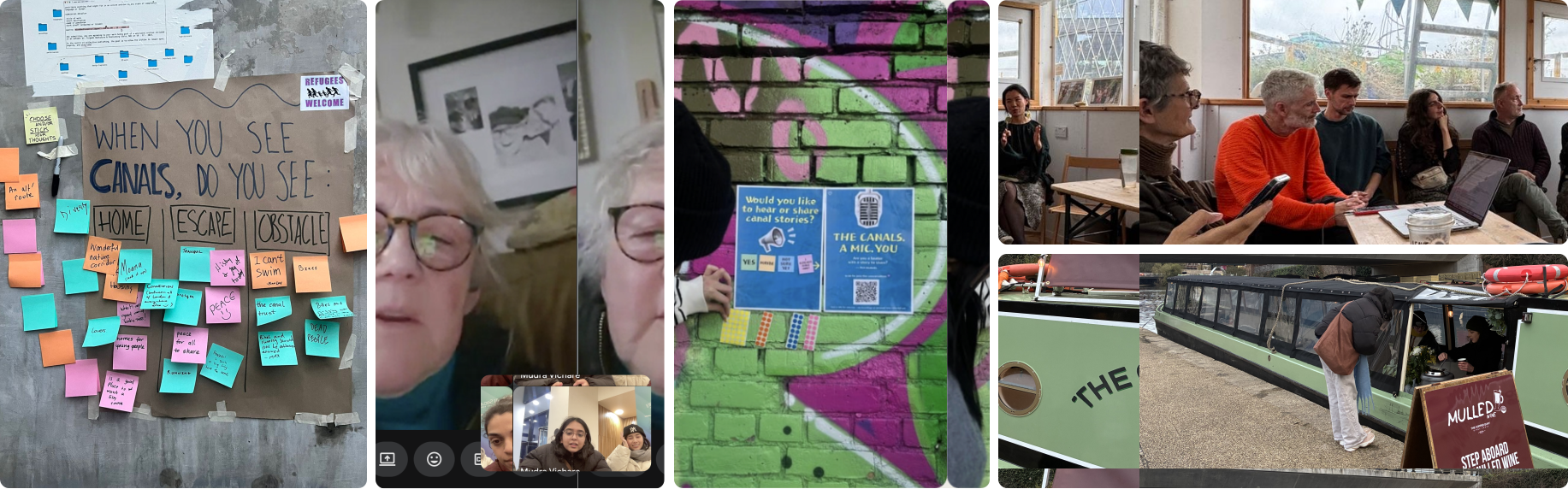
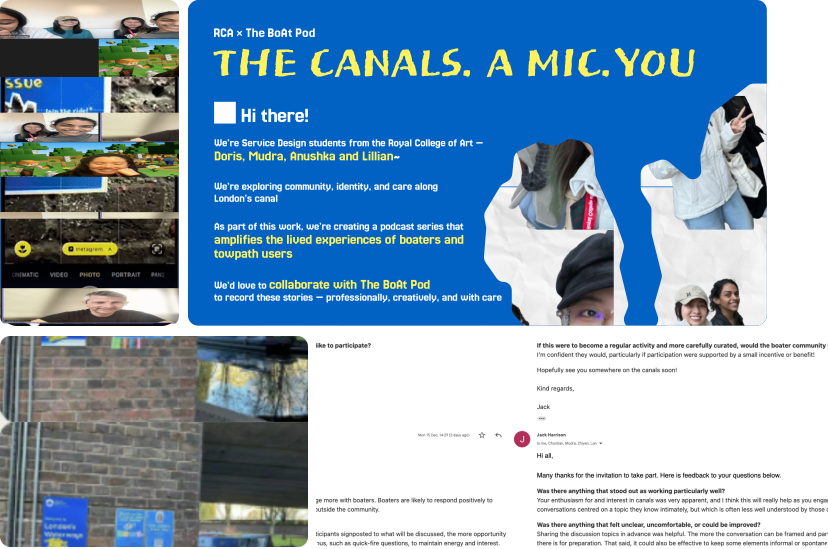
Early concept testing demonstrated strong engagement with 20+ passersby interactions. Testing sessions also captured qualitative feedback and short-form participant responses.
Challenges uncoveredFindings and Insights
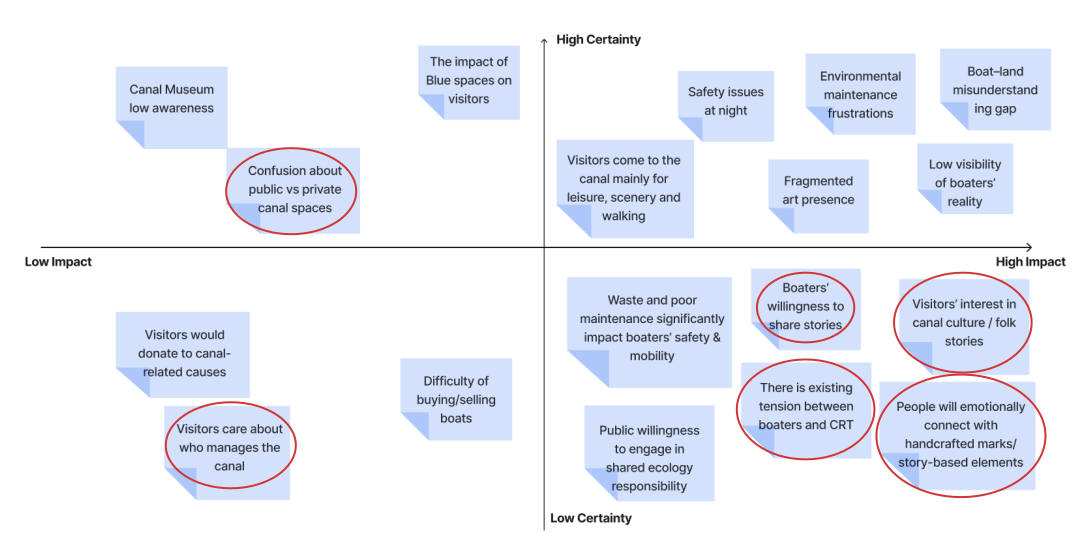
Following initial desk research, we developed key hypotheses to test with canal communities.
Conducted 5+ boater in-depth interviews and 20+ semi-structured interviews with towpath users, local businesses and the Canal River and Trust staff, across Coal Drops Yard and Paddington region, over a period of 8 weeks.Complemented this with ethnographic observation to understand how people move through and engage with canal spaces.
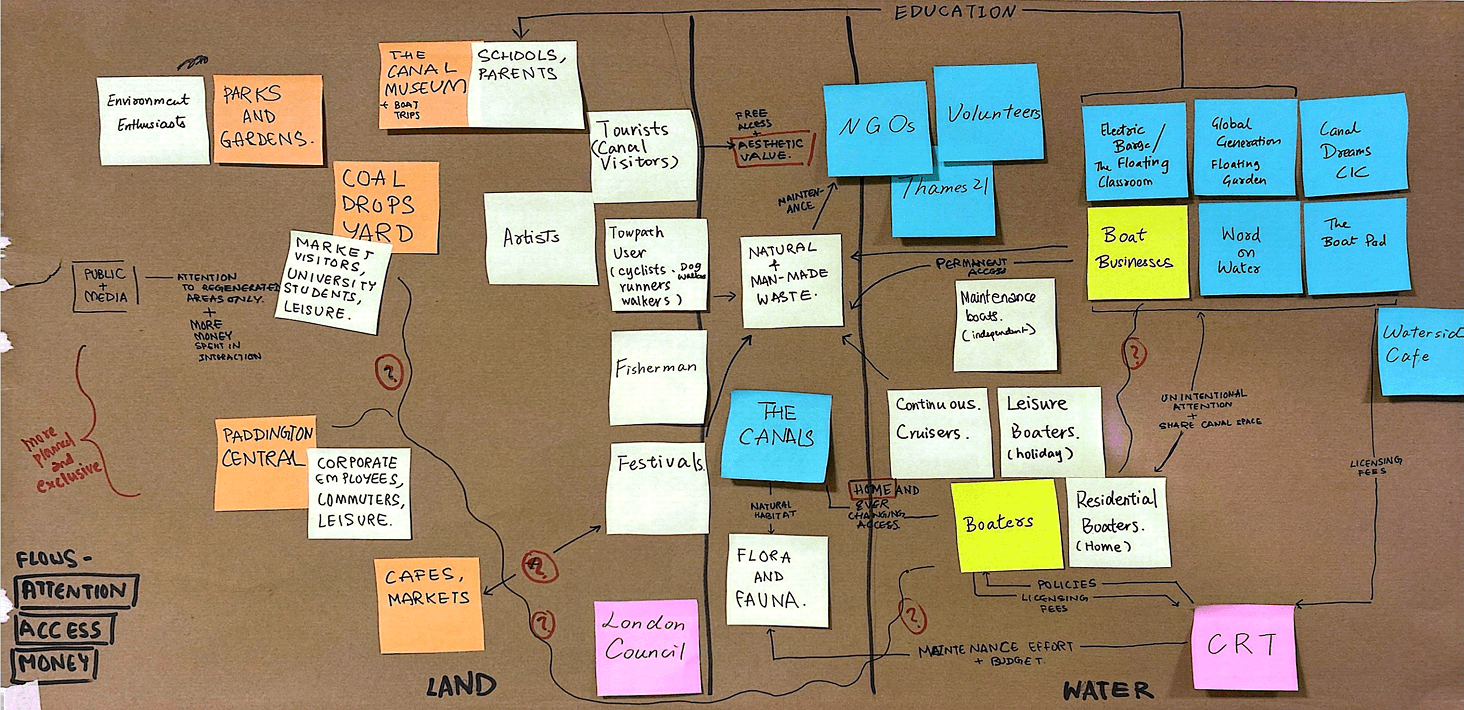
Focused Areas
Research revealed that while private canal developments receive greater attention, access and investment than the boating communities, boaters are still eager for meaningful public interaction, particularly through social, cultural and emotional connections that help build understanding.
- 01
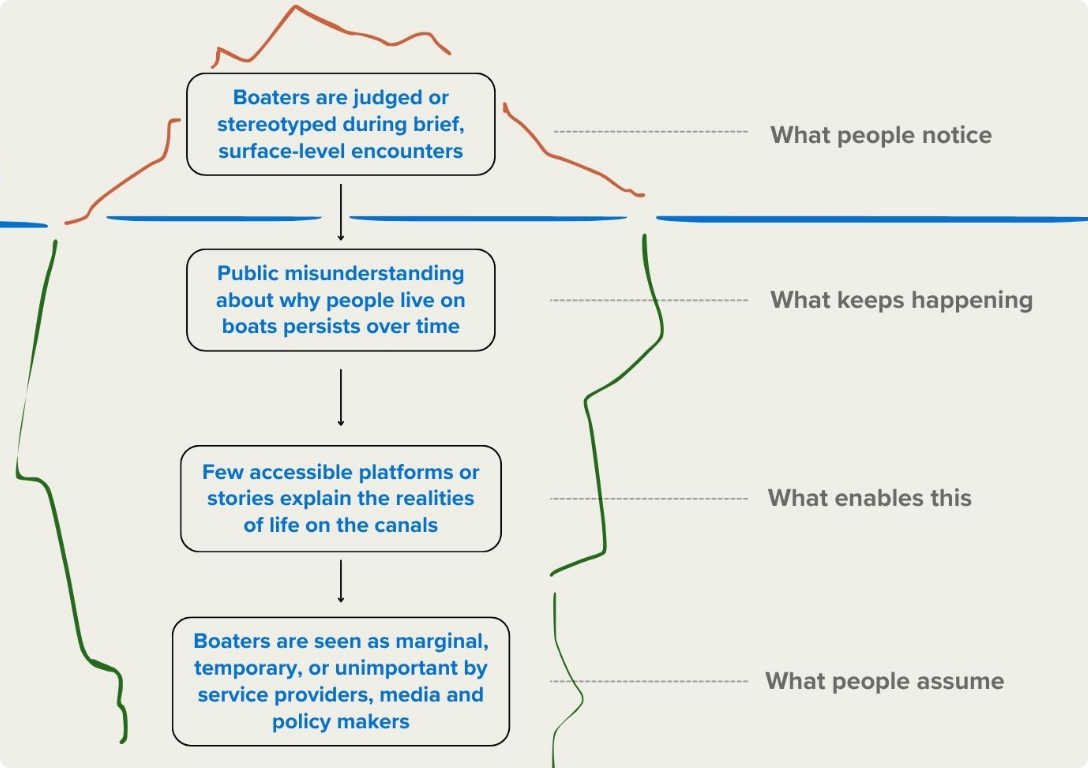
Public/towpath users have no accessible information channel about boater life, so they default to inference from appearance.
- 02
Boaters carry the labor of correcting misconceptions individually, repeatedly, with no system absorbing that labor on their behalf.
- 03
Institutions (Canal & River Trust, local councils) design services and consultations without boater input, because there's no established channel feeding boater perspective upstream.
- 04
Boater consultation and participation policy for London mooring decisions.
Assumptions
What research showed
Engagement would be hard to sustain
Partner workshops and boater interviews revealed boaters wanted to talk but had no outlet.
“My boat is my home. It's a place where I can invite friends. It's not a showpiece that I parade around, it's not! I feel as if my identity should not be attached to being a boater.”Nicholas (Live-aboard boater)
“We're not bloody travellers. We're not. We are people who choose to live on the water.”Marisa (Boater, retired mental health worker)
This is a “nice to have” and not a core infrastructure
Boaters and business owners named culture/relationships as a sustainability mechanism, not decoration.
Canal use is functional (transport/leisure)
Ethnography showed fragmentation even among users who share physical space daily.
Design OpportunityHypothesis
How might we reshape the perception and engagement with canal communities to foster social inclusion through storytelling?
Intervention needs to:
- Build community connection
- Amplify authentic canal stories for visibility
- Enable trusted knowledge sharing & access
Final Designsand Solutions
Over 3 months, we developed a multimodal experience for boaters and towpath users. This project aims to make, living in the canals, more supported and friendly.
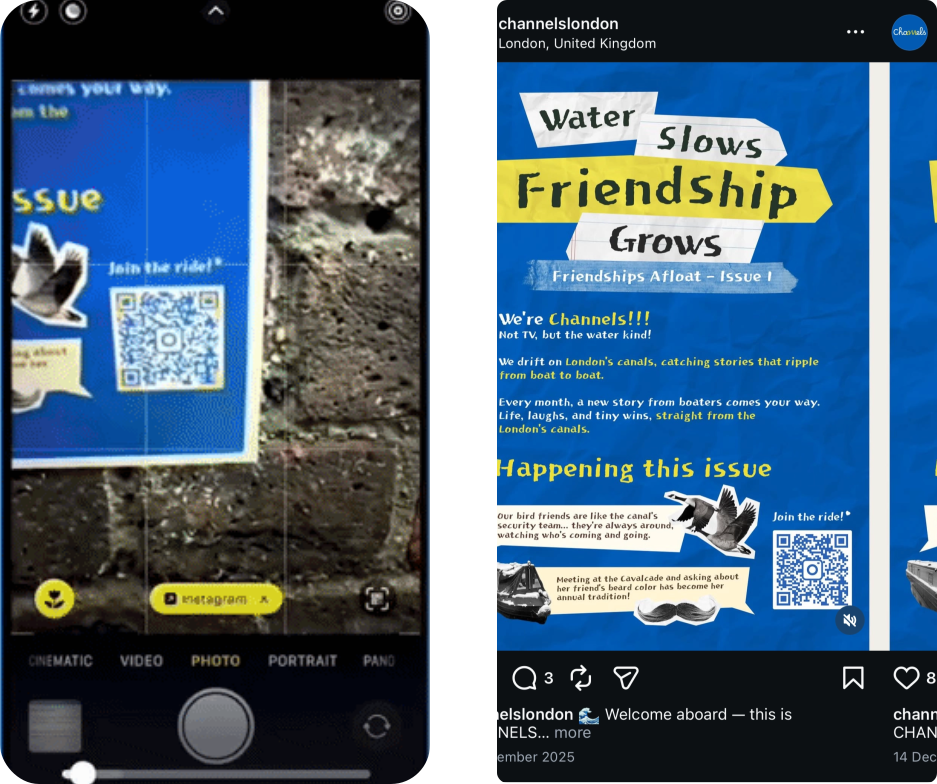
Capture and Distribution
(Digital → Podcast + Website + Archive)
Channels is a storytelling platform that lets boaters share their own voices, embedding their stories directly into the canal environment where misconceptions form, through physical touch points with QR codes to build a growing archive overtime.
Key decision points
- Audio over text or video: lower production and complements people narrating their day.
- QR-to-web rather than app: removes commitment barriers, letting visitors move from curiosity to listening in two taps.
Discovery and Prompt
(Physical → Canal-side posters, QR codes, guerrilla placements)
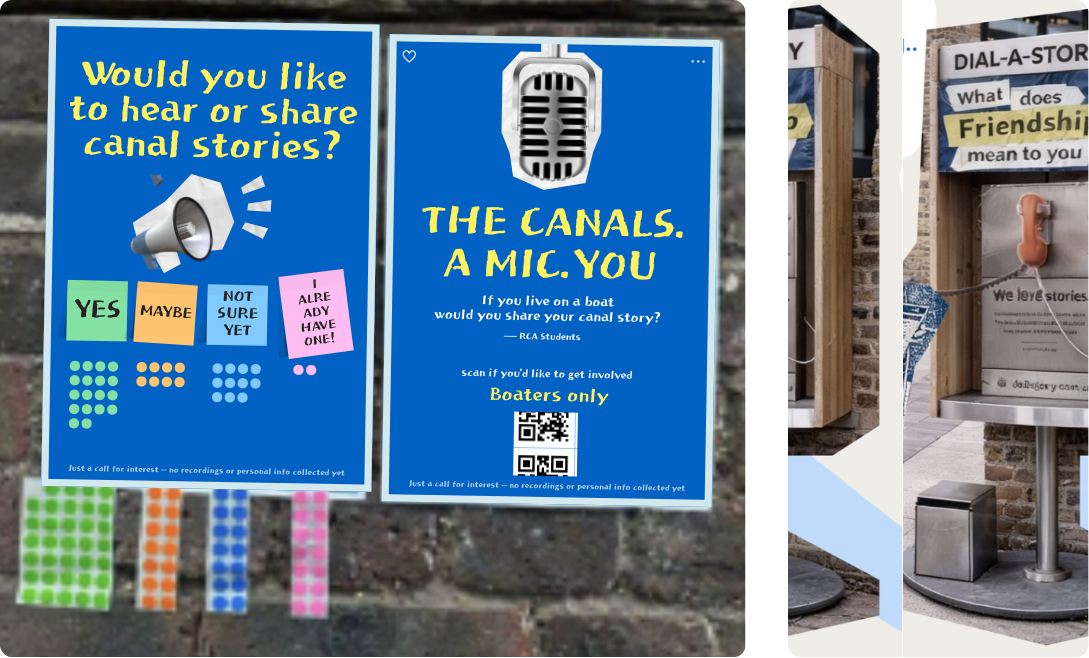
Visitors encounter the podcast via towpath interventions, posters and markers in high-footfall canal locations featuring short prompts and QR codes linking directly to the themed episodes on the digital platform. Designed for quick, 5s engagement while passing by.
Service Mechanism
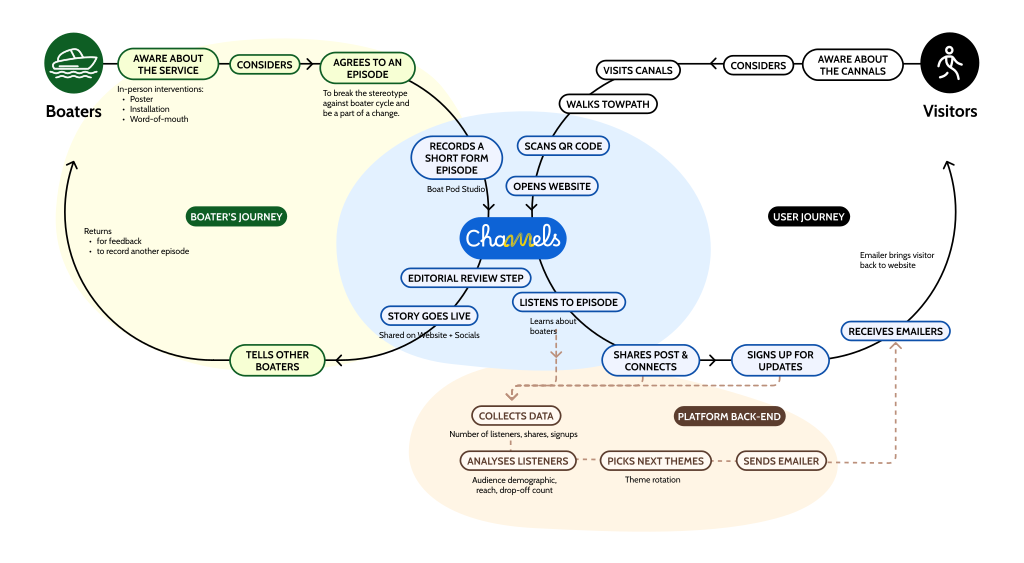
The loop depends on three handoffs: a boater agreeing to be recorded; a visitor noticing and scanning the QR; and that visitor and boater either sharing or returning.
Of these, the touchpoint for awareness of the visitor carries the most risk because it depends entirely on unprompted attention in a public space. This is why the physical touchpoint placement and messaging—not just the audio content—became a design problem, not an afterthought.
Outcomeand Impact
What we measured
Interactions, dwell time at the touchpoint, QR scan-to-listen conversion, short-form qualitative responses.
What we'd consider success at scale
Repeat listenership, boater-initiated submissions, a documented reduction in the consultation participation rate friction point by the CRT.
What we don't know yet & how we'd find out
A 2-month pilot cannot prove attitude change. Pre/post survey with towpath users, tracked over a season or a future partnership with CRT's existing engagement data will.
Roadmap

MVP Testing
- 2-touchpoint pilot
- Manual moderation
- Single-site test
1 - 2 years
- Partner formally with CRT for distribution + data-sharing
- Expand to 2–3 more high-footfall sites
- Build lightweight CMS so boaters can self-submit
4 - 5 years
Feed anonymized theme/sentiment data back to CRT and local councils as an input into consultation processes.