Disperse visitors
The first step needed to feel low-stakes and encourage exploration by connecting visitors to lesser-known places beyond iconic attractions.
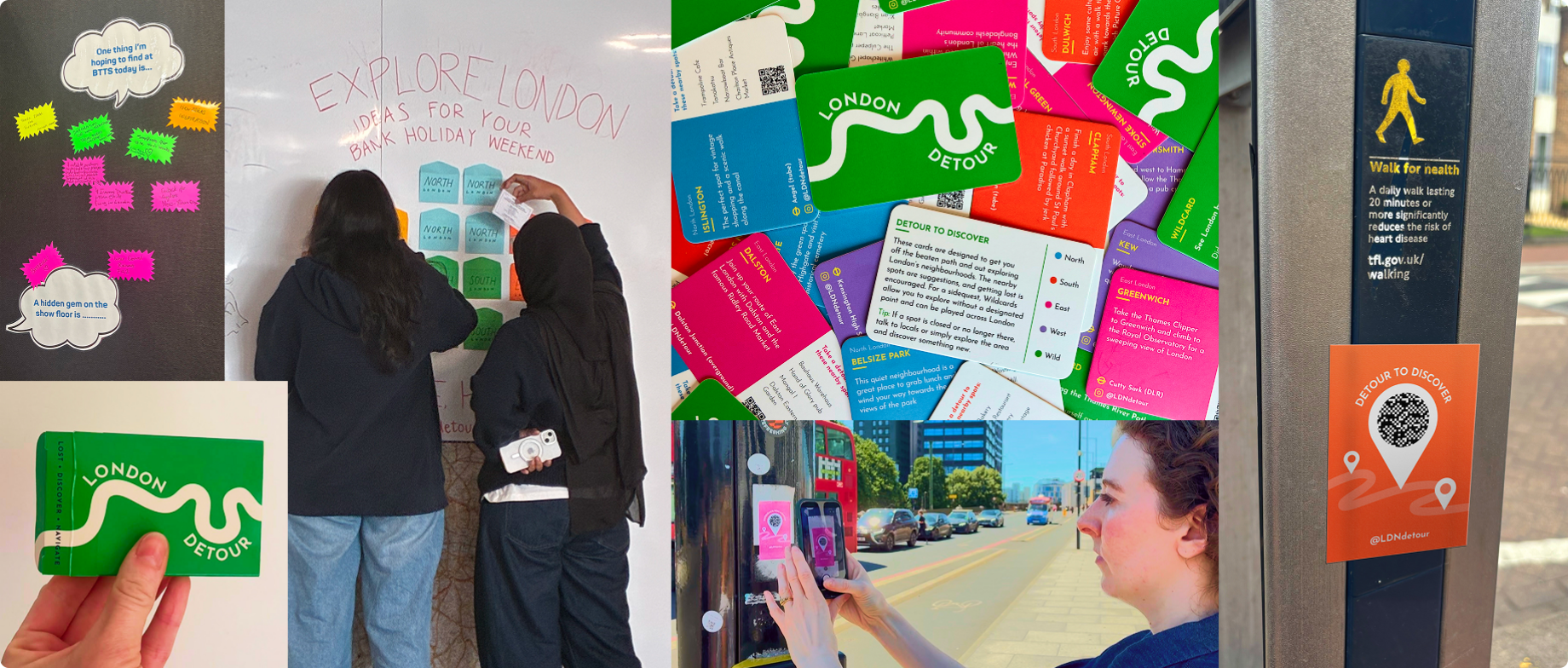
Testing a multi-touchpoint service to shift tourist behaviour towards discovering lesser-visited, more authentic sides of London beyond its hotspots.
To understand what prevents visitors from exploring beyond the centre and remove that friction at the right moment in their journey.
Changed behaviour: Visitors who received a prompt card changed their plans to visit locations they had not intended to explore.
Validated the model: 50+ visitors across four nationalities confirmed the intervention worked without an app, pre-commitment, or prior knowledge.
Generated investor interest: 5 investors expressed interest in taking the model forward at both city-wide and global scale.
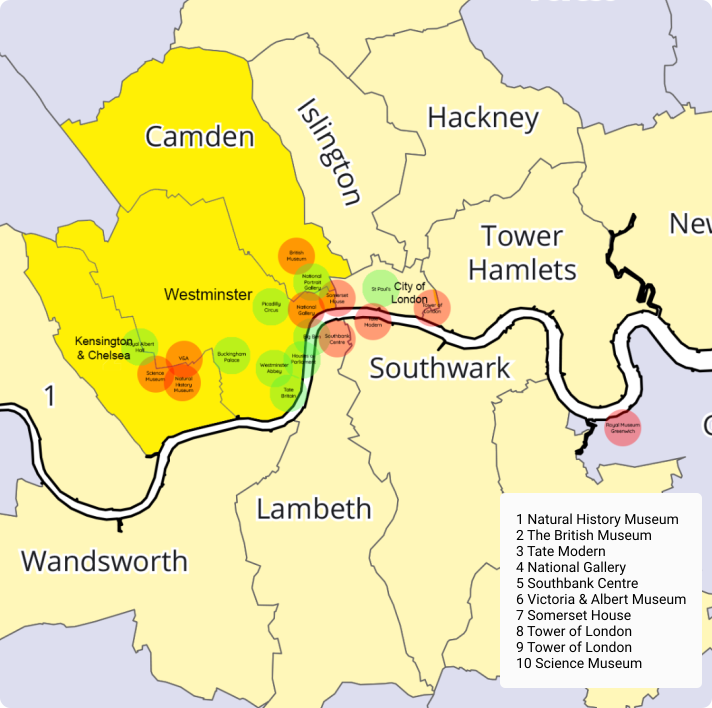
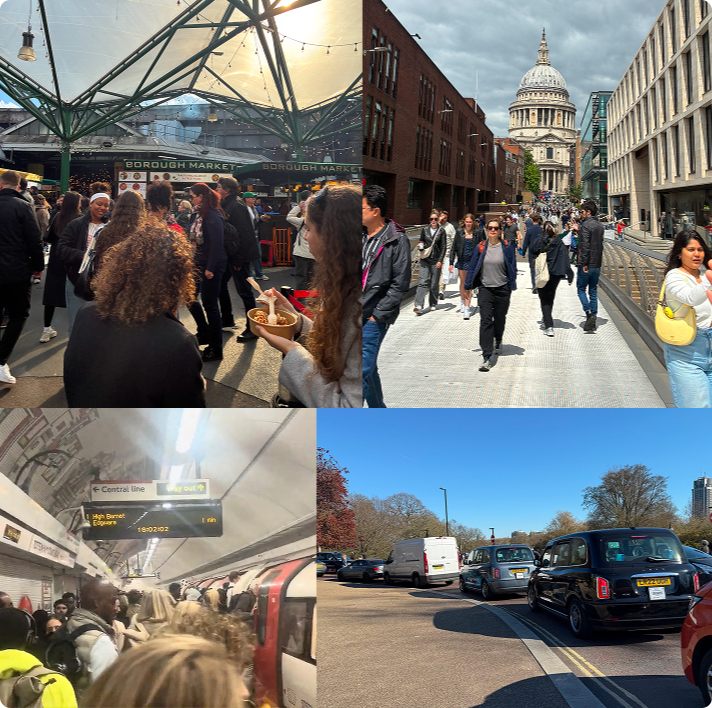
London's top 10 attractions cluster inside Kensington & Chelsea, Camden, and Westminster—three of thirty-three boroughs—accounting for 71% of visitor spend and creating an uneven distribution of tourism revenue.
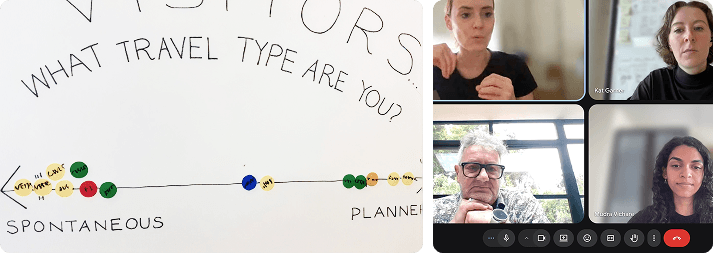
Secondary research confirmed highest-volume inbound markets (US, Canada, Western Europe) skew 25–34, are mobile-first, and arrive with loosely structured plans. These are not visitors who resist exploration. They are visitors who default to the familiar because the alternative requires effort they didn't budget for.
Complete Research ProposalInterviews with visitors and industry experts—including TfL's Head of Information, Design & Partnerships and the Hilton Trafalgar's concierge manager—revealed a clear pattern.
People wanted off-the-beaten-path experiences but defaulted to central London due to high uncertainty and distrust of generic lists.
The intervention therefore had to be specific, physical, and feel like a local recommendation.
“I like going to a mix of both but stumbling upon places organically always end up being my favorite memories.”
Erica (USA) - 35 years
“I avoid the touristy areas in London and prefer local bars, parks and friend-led exploration”
Saleem (France) - 27 years
“I have only planned a music gig and comedy show to go to in London and will explore in my free time.”
Hil (Norway) - 34 years
“I enjoy walking, local pubs, parks and exploring by tube & bus”
Varun (Canada) - 26 years
“People want something off-the-beaten path, a different offering to the usual (cheaper) tours.”
Terry (Edinburgh) - Tour Guide
“Visitors arrive with plans but still seek trusted recommendations for off-the-beaten path experiences.”
Gabriel (London) - Hilton Hotel, Trafalgar Sq.
“Visitors who explore beyond Zone 1 are more likely to return to London.”
Julie Dixon - TfL, Head of Information, Design & Partnerships
“Keeping parks and green spaces accessible is important for us, for visitors and Londoners alike”
Tim Webb - London Parks and Gardens, Interim Director
The pattern framed “decision making at specific moments in the journey” as a challenge and hence we came to three criteria that had to be true to be successful and what determined the final form of the intervention.
The first step needed to feel low-stakes and encourage exploration by connecting visitors to lesser-known places beyond iconic attractions.
Generic “hidden gems” lists exist everywhere and are largely ignored. We had to be specific, curate and build trust.
Visitors are already in motion, so anything requiring a download, sign-up, or advance planning adds friction. The intervention had to meet them where they were.

We identified three points in the tourist journey where these conditions could be created. Two visitor mindsets shaped how we designed for each: the Planned visitor, who needs permission to deviate, and the Spontaneous visitor, who needs a trusted starting point.
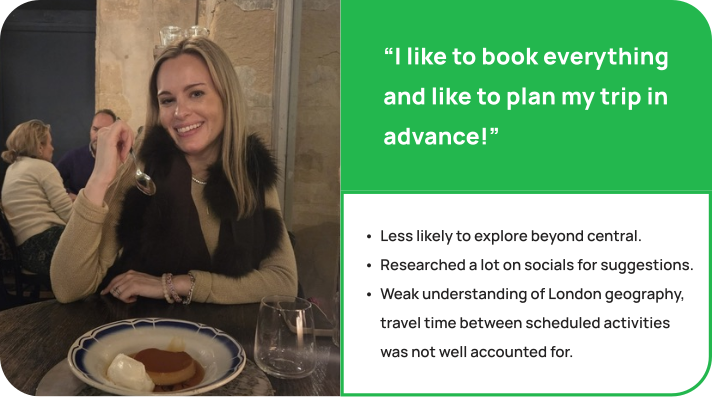
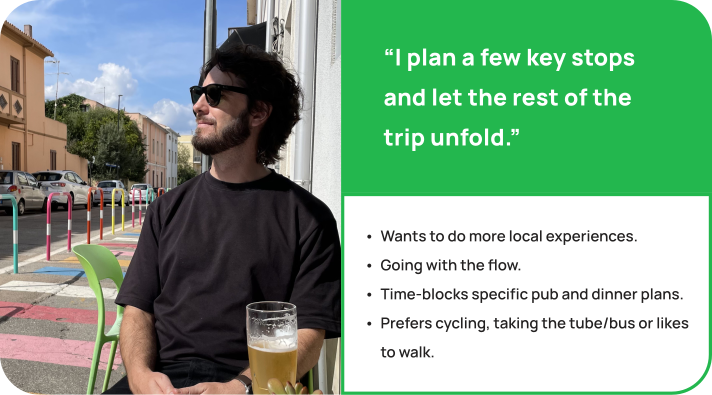
Tangible objects are more intriguing and easy to attract attention, so we tested it out with simplified approaches.
Rather than building a digital-first product that would face adoption friction before it delivered any value, we designed a physical-first system with a lightweight digital layer.
Hand-distribution at tourist hotspots, card racks at visitor information points and QR stickers placed at street-level locations allowed us to test engagement and reach.
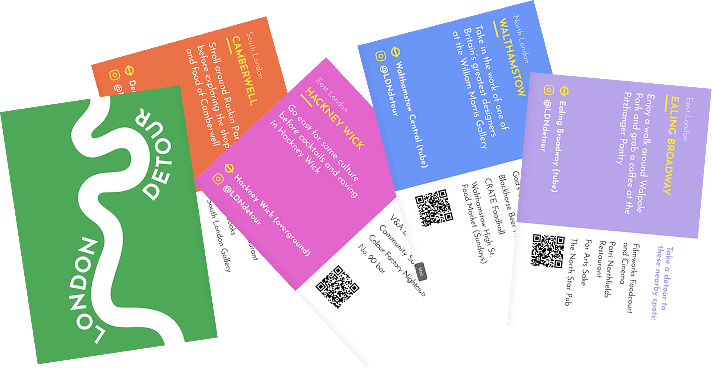
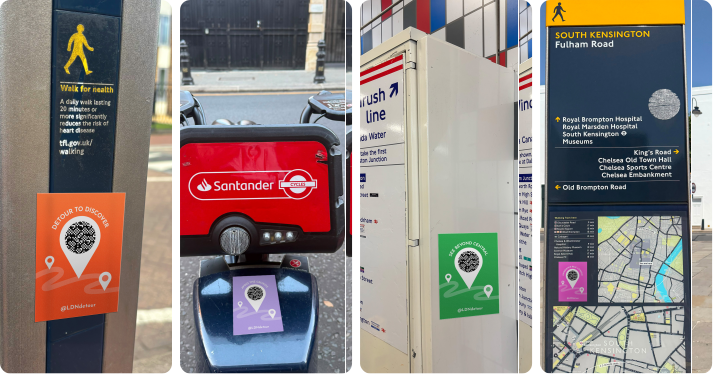
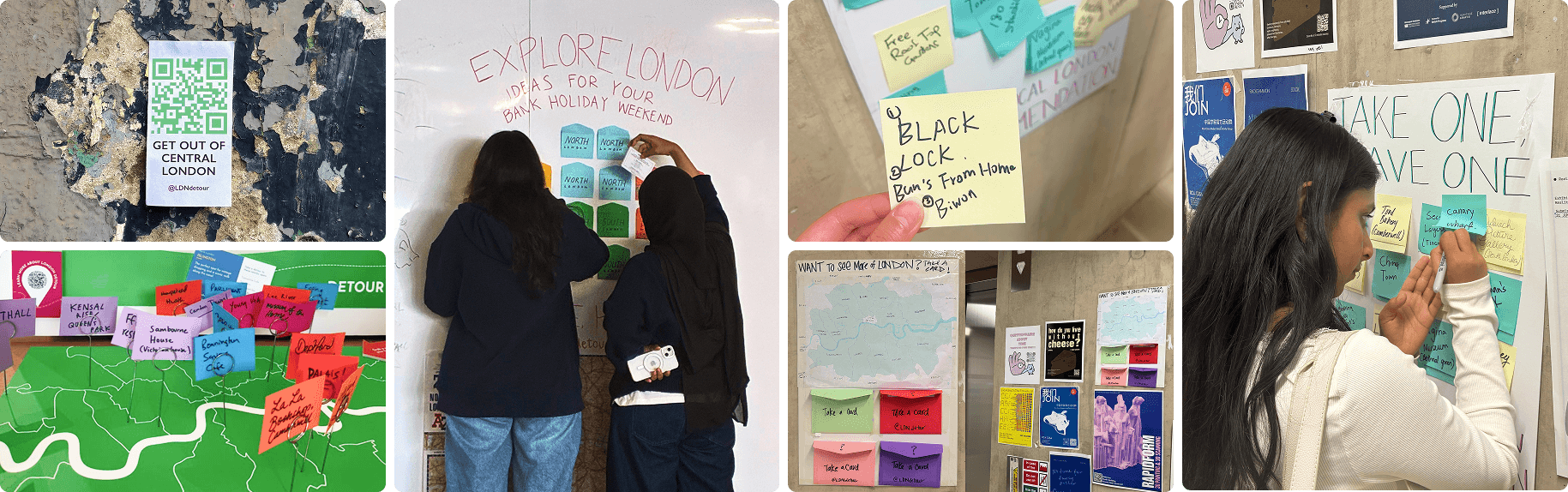
Feedback from experts and users validated the interventions as well as revealed risks which urged us to keep developing the methods to fill in the gaps.
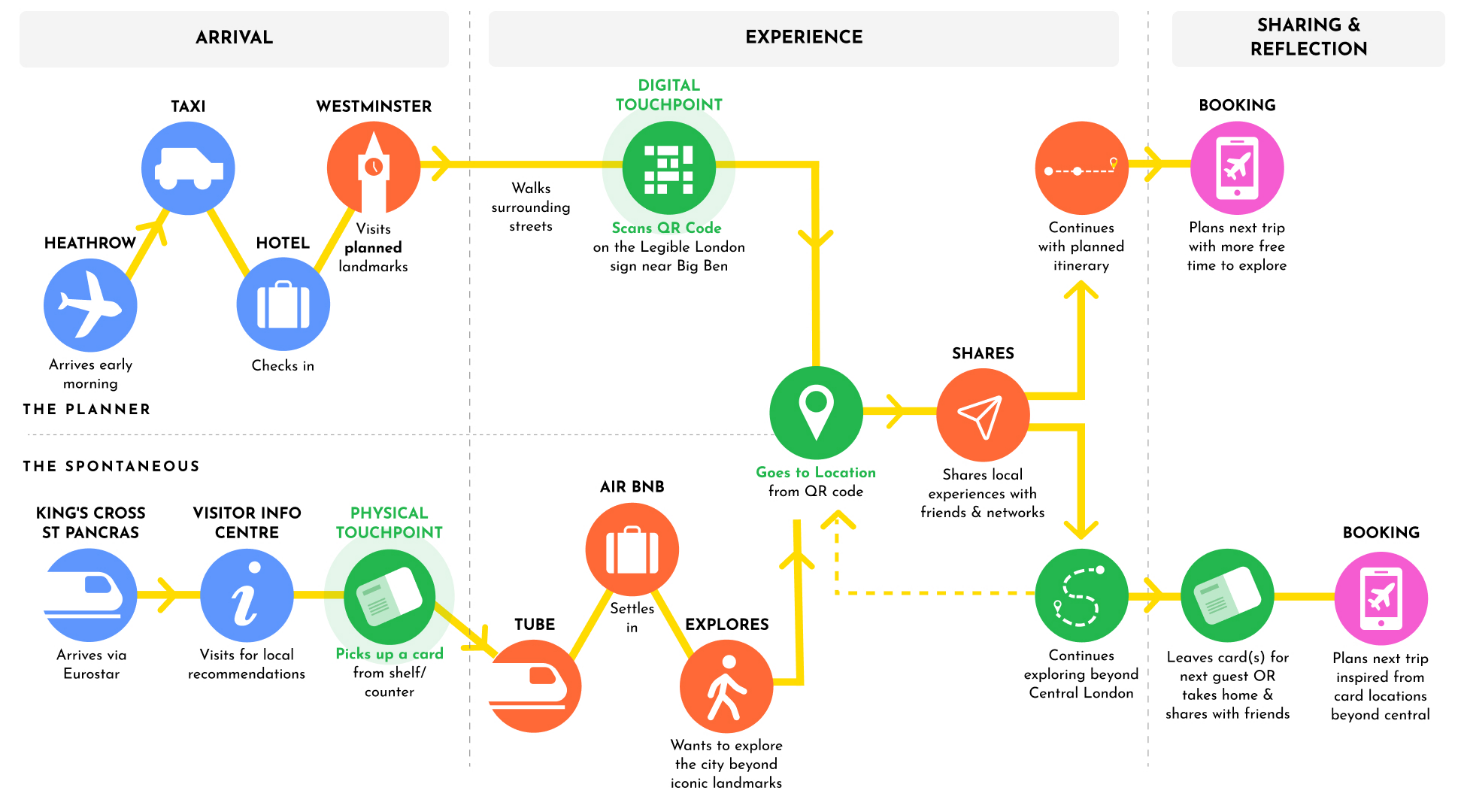
The same card worked differently depending on visitor mindset. Two patterns emerged clearly from testing.
Testing produced clear directional evidence. It validated the hypothesis that visitors would go if prompted.
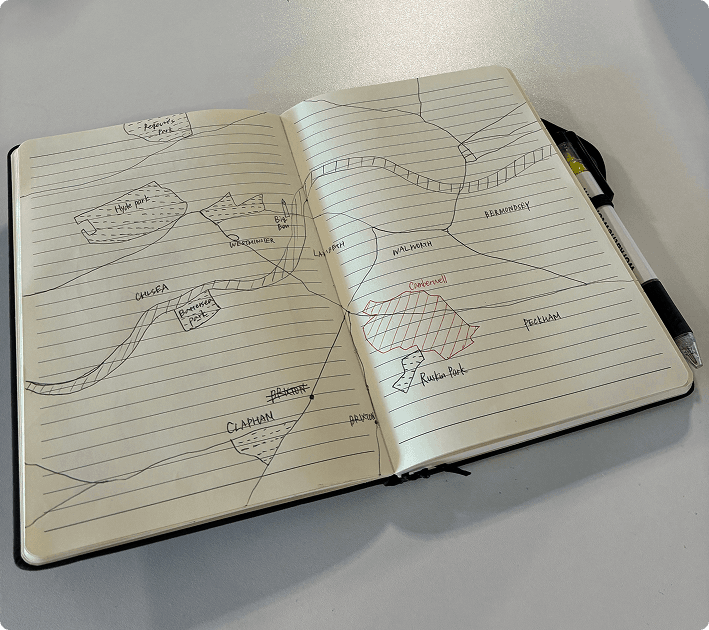
“I wouldn't have gone to this area without the prompt. I'd planned on going to Big Ben on the way to Ruskin Park but skipped it and spent the day in Camberwell instead”
~Yuki (from Japan)
“I was initially a little nervous going to Brixton, but I was surprised how much fun I had and how cool the area was”
~Juliette (Canada)
“Walking was fine with me, but if I'd been with my mother it would have been hard to complete the prompt”
~Finlay (Denmark)
“I really liked the card idea, I think a digital version or way of saving it to my phone would be good too”
~Harrison (USA)


The physical pilot was scoped for five key TfL stations (King's Cross, Kensington & Chelsea and Westminster) identified by visitor footfall data, giving enough geographic spread to test the intervention across both arrival contexts (Eurostar travellers, Heathrow transfers) and mid-trip moments.
Over the medium term we would keep reiterating the prompt locations by taking suggestions for new additions and also permanently integrate the QR codes into the Legible London street maps instead of stickers.
The long-term version is a data layer that uses time crowd signals to route visitors dynamically, taking pressure off saturated areas and distributing it to places that can absorb it.